
What Is 10DLC and Why It Exist
10DLC (10-digit long code) was introduced to solve a growing problem in business texting: customers were overwhelmed, carriers were overwhelmed, and legitimate small businesses were getting buried under a wave of spam and low-quality messaging. Before 10DLC, many companies relied on basic local numbers that weren’t designed for high-volume or automated communication. Carriers couldn’t distinguish real businesses from bad actors, which led to filtering, blocked messages, and frustrated customers.
10DLC flipped that ecosystem. It created a verified pathway for businesses to text customers with transparency and trust. Carriers now know who is sending messages and why. In return, consumers receive fewer spam texts, and businesses get far better deliverability.
For small and mid-sized companies, this shift has been a blessing. You get the freedom of using a local area code — something your customers instantly recognize — while gaining the reliability of a vetted messaging channel built specifically for business-class texting.
That’s why 10DLC exists: to protect customers, support real businesses, and keep text messaging a high-trust environment.
Who Needs 10DLC Registration
If your business sends any kind of text message to U.S. phone numbers, reminders, confirmations, promotions, support updates, or follow-ups, you fall under 10DLC rules. The carriers don’t distinguish between “small business texting” and “full marketing automation.” If the message is sent through software rather than a personal handset, it counts as A2P (application-to-person) traffic. And all A2P traffic must be registered.
A lot of companies get tripped up on intent. They assume 10DLC only applies to marketing blasts. It doesn’t. A dentist confirming an appointment, a real estate agent replying from a CRM, a gym texting class reminders, or a service provider updating a repair quote — every one of these use cases requires a registered Brand and Campaign.
Even low-volume senders need to register. Carriers require verification to prevent spoofing, reduce spam, and ensure message accountability. If they don’t recognize your business or use case, they limit throughput or block the traffic entirely.
And in 2025, unregistered messages don’t quietly “get through anyway.” They fail. Carriers have tightened filters across all major networks, which means unregistered senders see delivery gaps, unpredictable delays, or full shutdown within days of sending.
If you rely on texting for customer communication in any form, 10DLC isn’t an optional upgrade. It’s the infrastructure that keeps your messages deliverable and your business reachable. To go even deeper into how 10DLC works and how carriers evaluate senders, explore our Comprehensive Guide to 10DLC Registration and Messaging Rules.
Information You Need Before Registering
Getting approved quickly depends on preparation. Businesses that gather the right information in advance get approved faster, avoid carrier questions, and prevent application delays.
Here’s what you need ready before starting:
1. Business Information
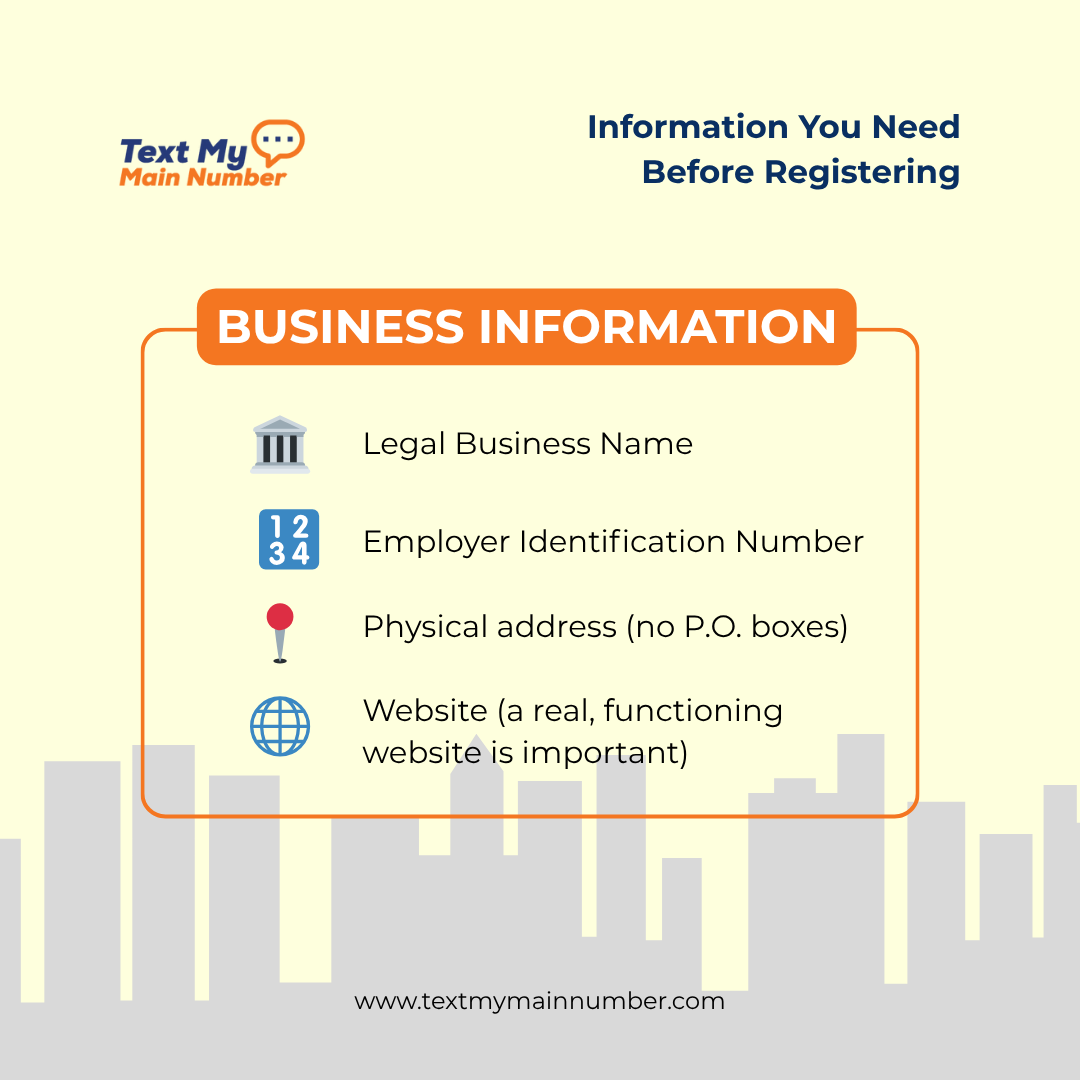
Carriers require legal details to verify that your business is legitimate:
- Legal business name
- Employer Identification Number (EIN)
- Physical address (no P.O. boxes)
- Website (a real, functioning website is important)
This creates your Brand Registration, which is step one in the overall 10DLC process.
2. Contact Information
.png)
Carriers want to know who is responsible for your messaging:
- Name
- Phone number
- Email address
- Role or title
This doesn’t have to be an owner; it just needs to be someone with authority.
3. Use Case Description
.png)
Explain what your business texts customers about. Carriers prefer clarity and transparency, not vague or generic answers.
Examples: appointment reminders, customer support, billing notifications, lead follow-up.
4. Sample Messages
.png)
This is where most businesses get stuck. Carriers require 2–3 sample messages that accurately reflect your texting experience.
If you send:
- Appointment reminders → Include one sample
- Promotional offers → Include one sample
- Support messages → Include one sample
Samples must follow compliance rules. They should not be misleading, incomplete, or suggest opt-out misuse.
5. Opt-In Method
Carriers want to see how customers give you permission to text them. You must describe where opt-ins happen:
- Online checkout
- Website forms
- CRM imports
- In-person consent
Businesses who skip or poorly describe this step are the ones who face delays. If your business texts restricted industries or age-sensitive content, make sure your opt-in flow aligns with proper verification guidelines outlined in our Age Gating for SMS Compliance Guide.
Step-by-Step 10DLC Registration Process
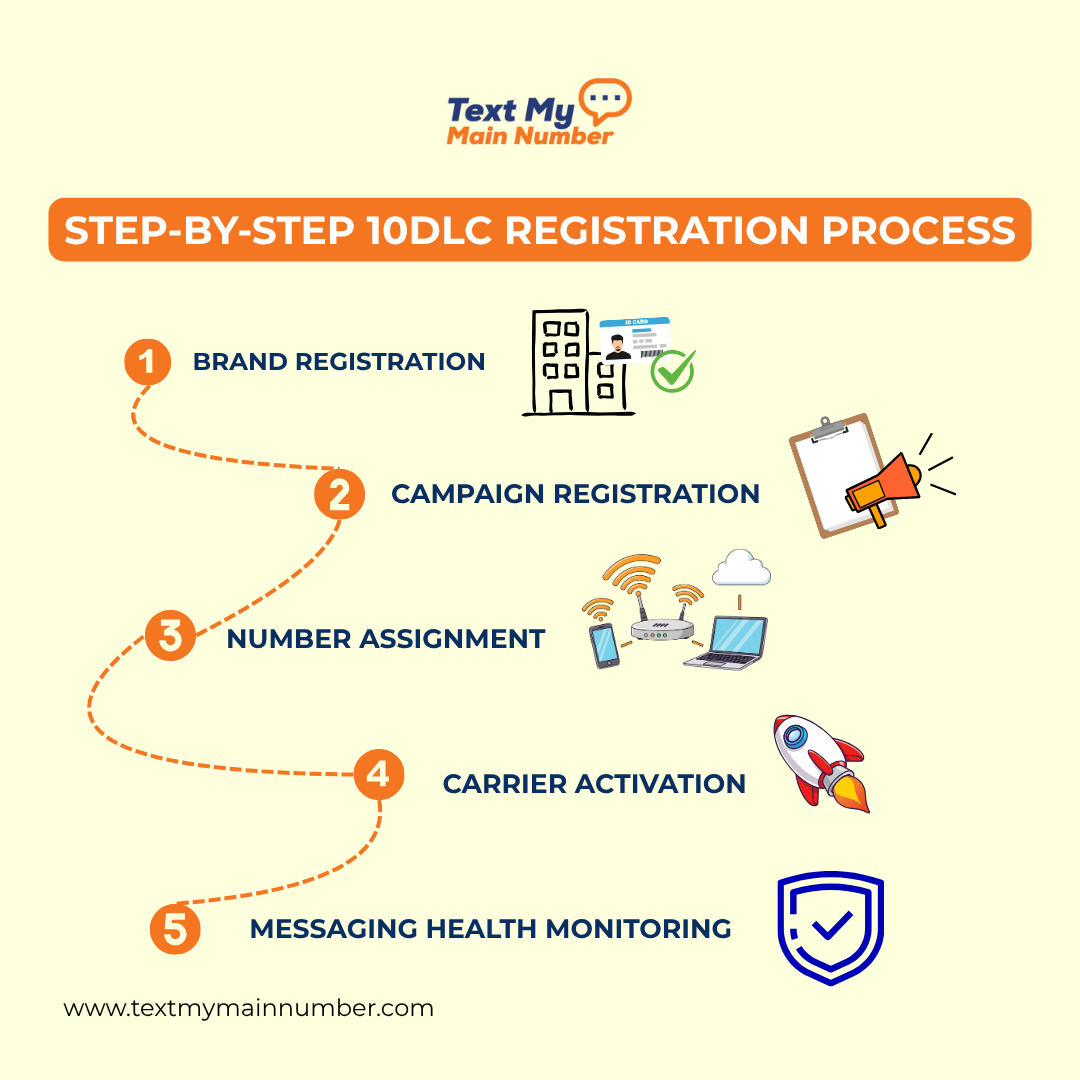
Once you’ve collected your business information, the registration process is straightforward — but accuracy matters.
Different platforms structure the flow slightly differently, but the core steps are universal.
Step 1: Brand Registration
This is the foundation of your 10DLC profile. You’ll submit your business information so carriers can verify you exist.
Approval typically takes anywhere from instant to 24 hours. Larger brands may take longer.
A complete, accurate Brand Registration significantly boosts your trust score, which impacts your daily message throughput.
Step 2: Campaign Registration
Your “campaign” is your use case — why you’re sending texts.
Carriers require:
- Campaign name
- Clear description of use case
- Opt-in details
- Sample messages
- Estimated messaging volume
This is the part where most businesses need expert guidance. Poorly written campaign details lead to rejections or lower trust scores.
A properly structured campaign tells carriers:
- What you send
- Who you text
- How customers opted in
- Why your messages are beneficial
Once approved, your campaign is assigned an ID used by carriers to authenticate your traffic.
Step 3: Number Assignment
After the campaign is approved, your numbers are linked to it.
If you’re migrating from another provider, you can reuse your existing number as long as it meets carrier guidelines.
If you’re setting up new numbers, this is the point where they get attached to your campaign.
Step 4: Carrier Activation
Everything goes live after carriers sync your brand, campaign, and numbers.
Activation time varies by carrier, but most businesses complete the full process within 1–3 business days when all information is accurate.
If you’re using a platform like ours at TMMN, we handle the heavy lifting for you.
Step 5: Messaging Health Monitoring
Once registered, it’s important to maintain compliance.
Carriers monitor:
- Opt-in records
- Opt-out activity
- Spam reports
- Content quality
A healthy profile means optimal deliverability — the reason you registered in the first place.
Why this matters (beyond cost)
- Deliverability: Registered 10DLC traffic gets better delivery and fewer blocks. That’s the point of the fees.
- Throughput: Strong brand reputation + correct use case + proper vetting = higher send speeds when it counts (BFCM, product drops, alerts).
- Compliance: Clean opt-ins, clear use-case descriptions, and accurate sample messages prevent slowdowns, audits, and penalties.
For a deeper look at avoiding costly compliance issues, check out our article on Avoiding Common SMS Compliance Risks.
Pro tips to avoid “fee creep”
- Consolidate where sensible: Don’t spin up extra campaigns you won’t use.
- Keep brand data clean: Exact legal name, EIN that matches IRS records, working website with clear opt-in language.
- Match everything: Use case, sample messages, and your live flows must align.
- Monitor MMS usage: Great for creative, but MMS surcharges add up—reserve MMS for moments that move the needle.
- Review your rate card quarterly: Carriers update surcharges; smart teams recheck margins.
10DLC Fees and Ongoing Costs
10DLC isn’t expensive, but it can be confusing because fees come from three places: The Campaign Registry (TCR), carriers, and your messaging provider.
Here’s the simple breakdown:
Brand Registration Fee
Most platforms charge a one-time or annual fee for Brand Registration. This typically ranges from $4 to $20.
Campaign Registration Fee
Campaigns usually cost $15–$30 every month, depending on the use case and provider.
Some specialties — like political messaging — may cost more.
Carrier Fees
Carriers charge small per-message fees on all A2P traffic. These are usually fractions of a cent but vary by carrier.
Messaging Provider Fee
Your software platform will also charge for SMS and MMS tokens. These are separate from carrier fees.
Total Cost Estimate
A typical business texting consistently spends:
- ~$4–$20 for Brand Registration (one-time or annual)
- ~$15–$30/month for Campaign Registration
- Per-message carrier fees
- SMS/MMS usage fees from your provider
10DLC adds cost to the ecosystem, but it dramatically increases deliverability — and that’s the whole point.
Avoid These 10DLC Registration Pitfalls That Delay Approval
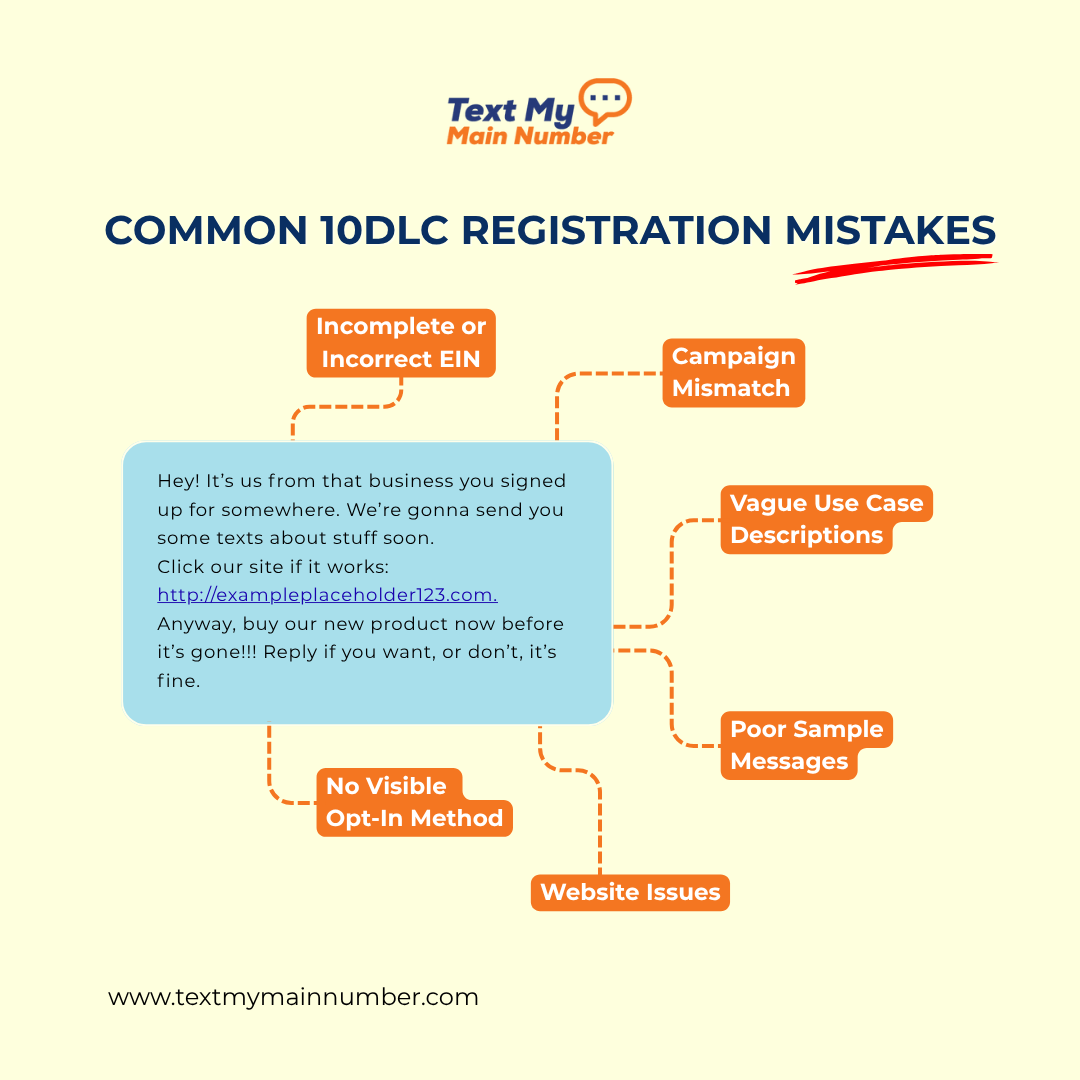
Navigating 10DLC registration isn’t hard—but many businesses still get tripped up by small errors that lead to costly delays. Based on thousands of submissions, here are the most common mistakes we see (and how to steer clear of them):
1. Submitting an Inaccurate EIN
This is the #1 instant disqualifier. Your EIN must match exactly with IRS records. Even minor mismatches—like using a trade name instead of your legal entity name—can trigger automatic rejection.
2. Writing a Vague or Generic Use Case
Carriers don’t approve applications that say “customer updates” or “marketing texts” without real detail. You need to clearly explain what kind of messages you send and why they’re valuable to your recipients.
3. Using Weak or Non-Compliant Sample Messages
If your examples are too promotional, unclear, or don’t match your actual SMS content, your campaign will be flagged. Avoid clickbait phrasing and clearly include opt-out instructions like “Reply STOP to unsubscribe.”
4. Skipping the Opt-In Process
No visible opt-in, no approval. Carriers need to see how customers agree to receive your texts—whether through a web form, keyword, or written consent.
5. Linking to a Low-Quality or Broken Website
A functional website is part of your brand’s credibility. If your site is missing key information, appears suspicious, or contains broken links, your trust score—and approval chances—drop fast.
6. Mismatching Your Campaign and Messaging
Your opt-in method, use case, and sample messages must all align. If you say you’re sending appointment reminders but provide discount codes as your samples, that inconsistency will delay (or block) approval.
All of these issues can slow down your registration, throttle your throughput, or get you rejected outright. But here’s the fix: register with a platform that knows what carriers expect. Our system is built to flag these issues before you submit—so you can start sending, not troubleshooting.
Final Thoughts
10DLC isn’t just a requirement — it’s the backbone of modern business texting in 2025. If your messages matter, if customer communication is part of your workflow, and if you want to protect your reputation, then being fully registered is non-negotiable.
Businesses that take the time to do 10DLC correctly earn better deliverability, fewer errors, and a smoother customer experience. Carriers trust them. Customers trust them. And their messaging becomes a real revenue-driver instead of a risky guessing game. If you’re comparing platforms or looking for tools that fully support registered business texting, our guide to the Best Business Texting Apps for Small Businesses provides a clear breakdown.
Ready to register your 10DLC and get expert guidance every step of the way? Start your 14-day free trial today and experience reliable, compliant business texting with Text My Main Number. Visit our activation page to get started.

.svg)