

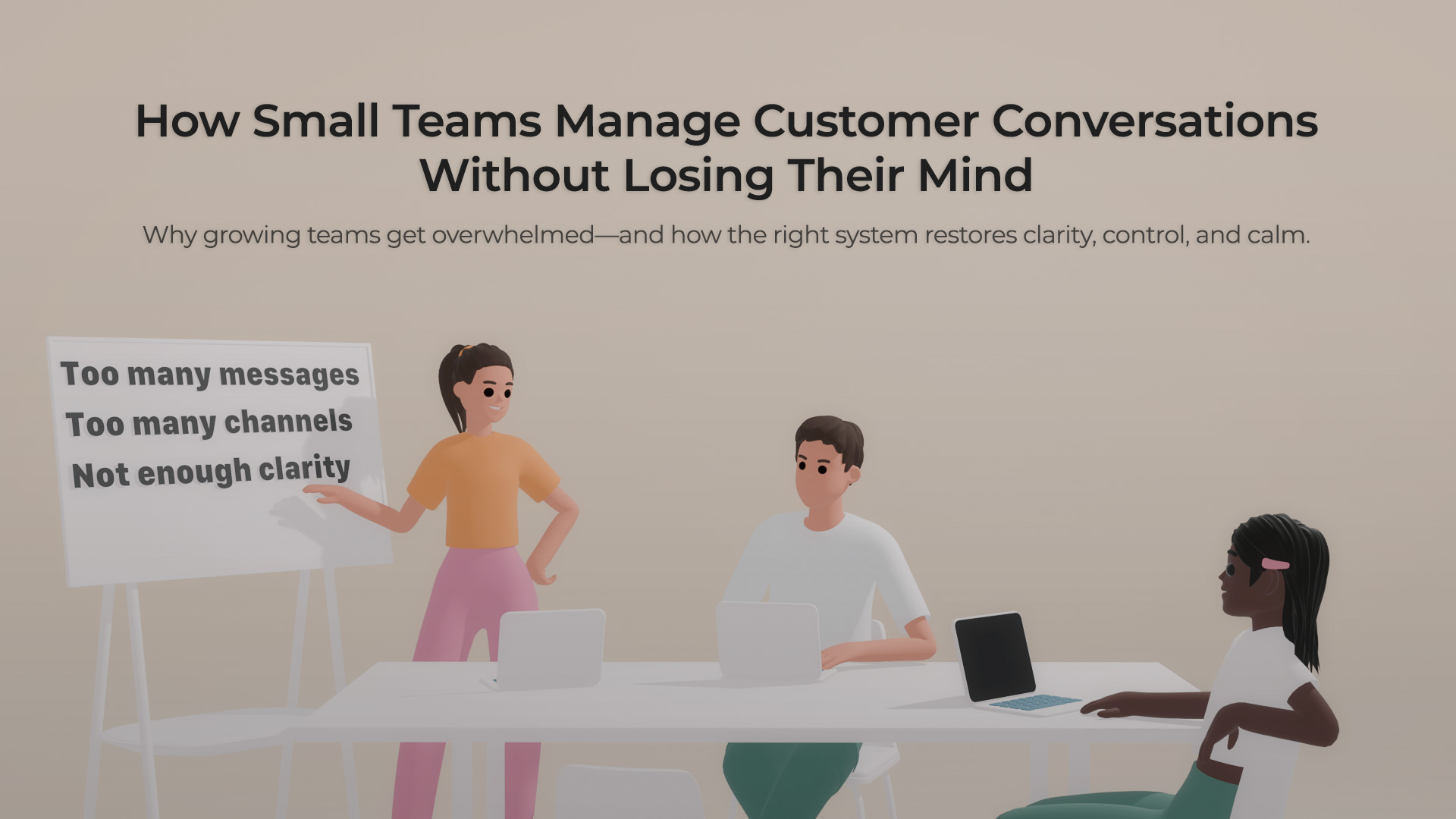

Small teams don’t fail at customer communication because they don’t care. They fail because the volume, speed, and number of channels outgrow the systems they started with.
What begins as a manageable inbox quickly turns into a constant stream of texts, emails, calls, chat messages, and social DMs. Everyone is responding. No one knows who replied last. Customers follow up because they didn’t hear back. Team members duplicate work. Important conversations slip through the cracks.
This article breaks down why that happens, what actually works for small teams in 2026, and how businesses manage customer conversations without burning out their staff—or sacrificing quality.
The Problem: Too Many Messages, Too Few People
For small teams, the volume of incoming messages isn’t always the core issue—it’s the fragmentation and unpredictability of those messages across too many channels, managed by too few hands.
Customers now reach out via SMS, email, live chat, voicemail, contact forms, and even social DMs. But when a business is operating with just two or three people juggling operations, sales, scheduling, and support, even a modest uptick in inquiries can feel overwhelming.
Why Support Overload happens
Support overload isn’t just about quantity—it’s about cognitive strain and lack of visibility. According to the American Psychological Association, multitasking and frequent task switching increase cognitive load, which can intensify communication overload in small teams. When team members are forced to constantly switch contexts, respond in real time, and manage multiple platforms without a shared system, communication breaks down fast.
In small teams, it’s common for one person to be responding to a customer text between calls or answering a support email while preparing an invoice. This multitasking isn’t sustainable. It leads to errors, long response times, and growing internal pressure.
The Hidden Cost of Multitasking and Disorganized Replies
Multitasking might feel productive, but in practice, it creates more problems than it solves:
- Reply fatigue: Switching between tone and context across platforms increases response time and mental load
- No single source of truth: Conversations live in personal inboxes, scattered apps, or on someone’s phone, making it hard to follow up or hand off
- No accountability: When a customer replies, no one is quite sure who’s responsible—so either no one answers, or two people do
Over time, this drains morale and results in reactive, inconsistent service. And the cost isn’t just internal. The customer feels the chaos, too. When messages slip through the cracks, businesses often experience exactly what’s described in Why Small Businesses Lose Customers to Missed Messages (And How to Fix It).
What It Looks Like on the Customer Side
Customers can sense disorganization even if they never see what’s happening behind the scenes. When messages go unanswered or replies contradict each other, it signals that something is off. A customer who reaches out via text and doesn’t hear back might send an email the next day—only to get a completely different answer from a different team member. If they have to repeat the same issue every time they switch channels, the experience feels fragmented and frustrating.
Even basic requests start to feel like a hassle when there’s no continuity. A delay that might be forgivable once becomes a red flag when it happens twice. Customers begin to assume that they’re not being heard—or worse, not being valued.
Over time, these small breakdowns create a larger credibility gap. And for small businesses that depend on reputation, word-of-mouth, and loyalty, that erosion of trust can have real consequences. Once the customer feels the friction, they’re already halfway out the door.
Why Traditional Tools Break Down Fast
Most small businesses start with tools that weren’t built for collaborative customer communication.
Email inboxes become cluttered and hard to prioritize. Shared phone numbers provide no visibility into who answered or what was said. Personal devices blur the line between work and personal time. Spreadsheets and notes try to fill the gaps, but never scale.
The core issue is visibility.
When there’s no shared view of conversations, teams can’t coordinate effectively. This lack of visibility is one of the main reasons outlined in Why Businesses Can’t Afford to Lose Customer Messages — And What to Do About It. There’s no clear ownership, no accountability, and no reliable way to track follow-ups. As customer expectations rise—especially around response time—these cracks widen fast.
In a multi-channel world, disconnected tools don’t just slow teams down. They actively work against them.
Core Principles That Keep Small Teams Sane
.png)
Small teams don’t need enterprise-level systems or rigid, complex workflows. What they need is clarity, coordination, and control. The more noise you remove from daily operations, the more focused and responsive your team becomes. And that starts with following a few foundational principles that make customer communication manageable—no matter how many channels or requests come in.
Centralize All Customer Conversations
When messages live across email accounts, personal phones, chat apps, and social platforms, chaos is inevitable. Small teams can’t afford to spend time hunting for past conversations or checking multiple inboxes just to see what’s pending.
Bringing all customer conversations into a single, shared system—whether it’s SMS, email, or chat—removes the guesswork. This approach reflects the broader shift explained in Why Modern Customer Communication Isn’t One Channel Anymore (2026 Guide). It gives your team a full view of what's happening and ensures nothing slips through the cracks.
Assign Ownership for Every Conversation
One of the biggest reasons messages get missed or answered twice is that no one knows who’s responsible. Without clear ownership, every message becomes everyone’s responsibility—and therefore no one’s.
High-functioning small teams assign every conversation to a specific person. That could mean manually assigning chats or using automation rules to route messages based on timing, topic, or customer type. The goal is always to know who’s “on it.”
Preserve Customer Context Across Channels
Few things frustrate customers more than having to repeat themselves. Whether they start on SMS and follow up by email, or talk to one team member today and another next week, they expect you to know the history.
Successful teams keep conversation history unified and visible, regardless of channel. That way, anyone stepping in has the full picture—what was said, when it was said, and what’s still pending. This isn’t just about convenience—it’s about building trust through consistency.
Standardize Common Replies to Reduce Mental Load
Not every message needs to be crafted from scratch. Teams that answer the same questions over and over—about hours, pricing, appointment policies, shipping, etc.—benefit from having a library of saved responses or templates.
These aren’t generic auto-replies. They’re well-written answers that save time, reduce decision fatigue, and ensure consistent tone and information across the team. Many teams build these libraries using frameworks similar to those in SMS Autoresponders for Small Businesses in 2026: The Complete Human-Centered Guide. They free up mental energy for the messages that actually require creative thinking or empathy.
It's About Simplicity, Not Automation for the Sake of It
These principles aren’t about removing the human touch. They’re about removing friction, so your humans can work smarter, not harder. When your team isn’t scrambling to figure out who replied last or digging through messages to find the context, they can focus on what matters: giving customers clear, timely, thoughtful responses.
Small teams don’t need more people. They need better systems that support the ones they already have. That starts with structure, visibility, and tools built for the reality of how customers communicate today.
What to Look for in a Conversation Management Tool
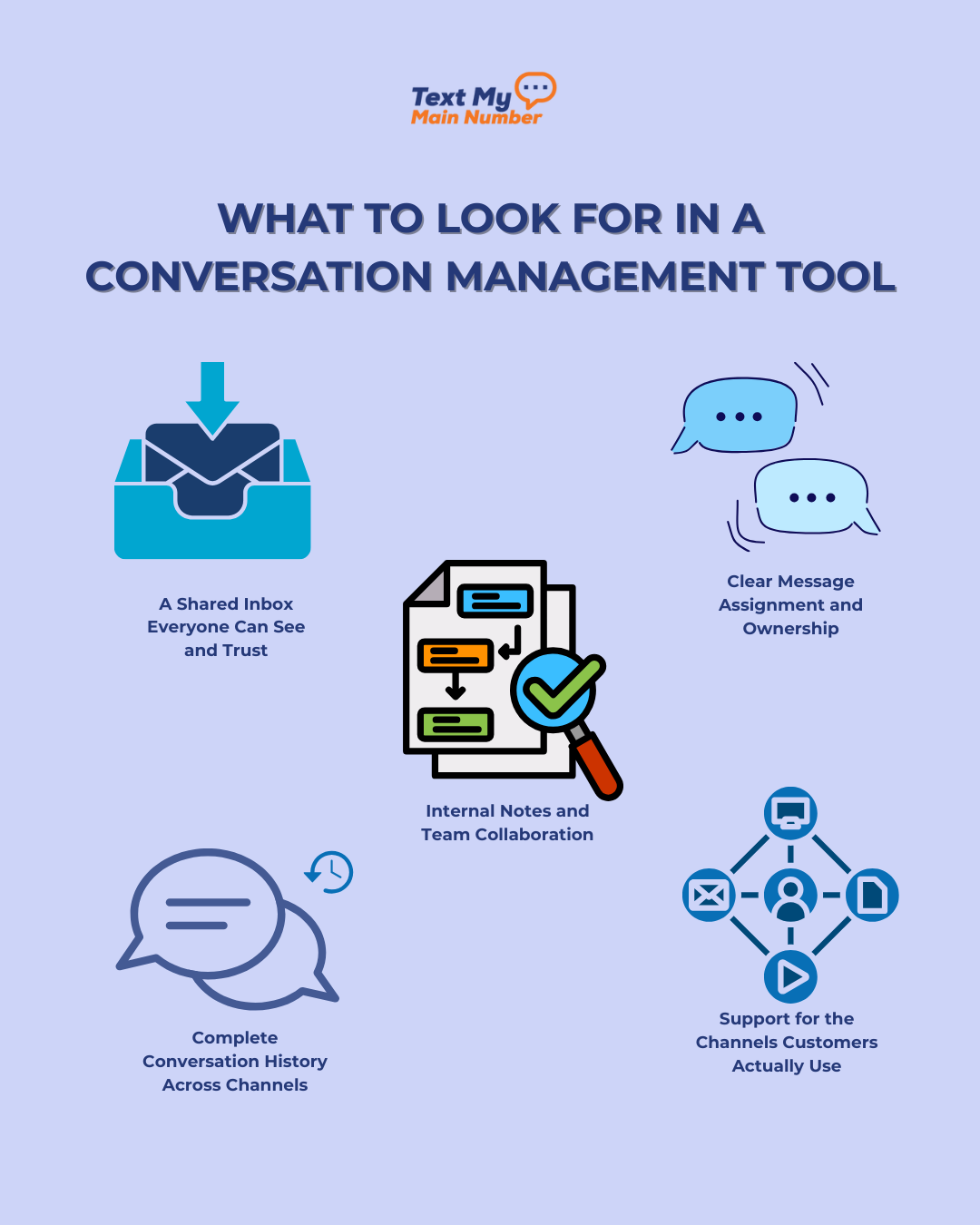
For small teams, the right conversation management tool should feel like relief—not another system to learn or maintain. If a platform adds steps, creates confusion, or forces your team to work around it, it’s solving the wrong problem. The best tools don’t make communication more complicated. They quietly remove friction from everyday work.
When evaluating a solution, small teams should focus on capabilities that support visibility, accountability, and continuity—without requiring heavy setup or technical overhead.
- A Shared Inbox Everyone Can See and Trust
At the core of effective conversation management is a shared inbox. Every incoming message—whether it arrives via text, email, or another channel—should be visible in one place. This eliminates the need to check multiple apps or personal inboxes and ensures the entire team has real-time awareness of what’s happening.
- Clear Message Assignment and Ownership
A good system makes responsibility obvious. Message assignment ensures that every conversation has a clear owner, so nothing sits unanswered and no two people reply at the same time. This alone eliminates a large percentage of missed messages and duplicate responses.
- Internal Notes and Team Collaboration
Customer conversations often require internal context. The ability to leave private notes, tag teammates, or hand off conversations allows teams to coordinate without exposing internal discussion to the customer. This keeps replies accurate, consistent, and aligned—especially when multiple people are involved.
- Complete Conversation History Across Channels
Customers don’t think in channels, and your tool shouldn’t either. A strong platform preserves full conversation history, even when customers switch from text to email or follow up days later. This gives your team instant context and allows anyone to step in confidently without asking the customer to repeat themselves.
- Support for the Channels Customers Actually Use
A conversation management tool should support the channels your customers prefer—not force them into one option. SMS, email, and other core channels should work together naturally, so your team isn’t juggling separate systems or losing track of conversations as they move between platforms.
Why This Matters for Small Teams
Instead of managing fragmented tools, teams work from a single, intuitive interface that keeps conversations organized, visible, and easy to manage. The focus isn’t on complexity—it’s on control.
When the right tool is in place, communication stops feeling reactive. Your team knows what’s been answered, what needs attention, and what’s next. That clarity is what allows small teams to handle high volumes of customer conversations—without stress, without confusion, and without losing their mind.
How Small Teams Prevent Chaos and Scale Responsiveness Without Hiring

For small teams, the tipping point in customer communication usually isn’t the number of inquiries—it’s the lack of clarity around who’s doing what, and when. Overlap, missed messages, delayed replies—these aren’t just the result of being understaffed. They’re the outcome of systems that leave too much to chance.
When you don’t know if someone’s replied, or if a follow-up was sent, or who’s responsible for a specific conversation, communication becomes reactive. Team members jump in without context, customers get inconsistent responses, and no one is sure if a message slipped through the cracks. It’s not just inefficient—it’s exhausting.
The solution isn’t necessarily more people. It’s a better structure.
Small teams that stay organized do a few key things consistently:
- They assign every conversation to someone specific. When ownership is clear, there’s no second-guessing. Everyone knows what’s been handled and what still needs attention.
- They track communication history across messages. This ensures that anyone on the team can step in, mid-conversation, with full context—without making the customer repeat themselves.
- They use alerts, reminders, and status updates to surface what’s urgent, what’s pending, and what’s resolved—so nothing gets lost in the shuffle.
This level of structure isn’t about micromanagement. It’s about building confidence into your process—so your team isn’t operating in the dark.
But structure alone isn’t enough. To truly scale, small teams also need to reduce the mental load that comes from constant decision-making and repetition. That’s where simple process upgrades make a big difference:
- Saved message templates for FAQs, appointment confirmations, and follow-ups speed up replies without sacrificing tone or personalization.
- Auto-replies for after-hours or peak periods set clear expectations with customers—and buy the team breathing room.
- Prioritization workflows help focus attention on high-intent or time-sensitive messages first, ensuring fast response where it matters most.
- Scheduled follow-ups and reminders take the pressure off team memory and ensure no lead or issue goes cold.
These aren’t enterprise-level solutions. They’re practical tools that help small teams respond faster, more consistently, and with less stress.
When combined—clear ownership, smart tracking, and light automation—small teams can manage high volumes of customer communication without missing a beat. Instead of scrambling, they’re in control. Instead of reacting, they’re leading the conversation.
A Realistic Scenario: A 3-Person Service Team
Consider a local service business with three staff members handling bookings, customer questions, and follow-ups.
Before centralizing conversations, messages were scattered across phones and email inboxes. Customers followed up repeatedly. Staff felt constantly behind.
After moving to a shared conversation system, every message had visibility and ownership. Response times dropped. Follow-ups became reliable. The team stopped reacting and started managing.
The workload didn’t disappear—but it became predictable. Small teams that invest in clarity, coordination, and the right tools can deliver an experience that feels personal, responsive, and professional—without losing their sanity.
Try Text My Main Number Free for 14 Days
Text My Main Number is built for small teams that need to manage real customer conversations without complexity.
With shared visibility, conversation history, and tools designed for everyday business communication, it helps teams stay organized and responsive as they grow.
Start your 14-day free trial today and see how much easier customer communication can feel when everything works together.

.svg)

