
The Shift in Customer Expectations
Back in the early days of digital business, having a single phone line or a basic contact form was enough to manage customer communication. But in 2026, expectations have changed—dramatically.
Today’s customers aren’t just digital-first. They’re channel-fluid.
They might schedule a service via SMS, ask a follow-up question through live chat, confirm via email, and then call with a last-minute update. And they expect your business to keep up without making them repeat themselves at every step.
This shift isn't limited to tech-savvy consumers either. Across industries—whether you're running a real estate agency, managing patient communication in a dental practice, or coordinating logistics in a field service business—customers now expect flexibility. The communication channel should adapt to them, not the other way around.
We’re Living in an On-Demand, Asynchronous World
One of the biggest changes since the pandemic-era digitization boom is that real-time no longer always means “phone call.” Customers want instant responses—but they also want control over timing. That means they prefer channels that are:
- Asynchronous (they can reply when it suits them)
- Familiar (like SMS or social DMs)
- Fast (no waiting on hold)
- Non-intrusive (not everyone wants a phone call for a simple question)
A one-channel strategy doesn’t meet any of those expectations. And worse, it creates friction where none is needed.
This is exactly why more small and mid-sized businesses are moving toward multichannel customer communication strategies in 2026: not just to “offer more ways to reach us,” but to meet customers where they already are, with the responsiveness they already expect. Many businesses only recognize this shift after experiencing missed inquiries, delayed replies, and customer drop-off — a pattern explored in Why Small Businesses Lose Customers to Missed Messages (And How to Fix It).
Why One Channel No Longer Works
Relying on a single communication channel creates more problems than it solves. A phone-only setup means missed calls and voicemail backlogs. Email-only support often gets buried in inboxes, delayed, or ignored. And social DMs without structure quickly become disorganized.
Worse, customers feel unheard. If someone texts and then calls because no one replied, they expect context—not to explain themselves all over again.
In high-touch fields like healthcare or real estate, this leads to lost trust. In retail or services, it leads to lost sales. Businesses operating on just one or two disconnected channels aren’t just behind—they’re bleeding efficiency and credibility.
Multichannel vs. Omnichannel: What’s the Difference?
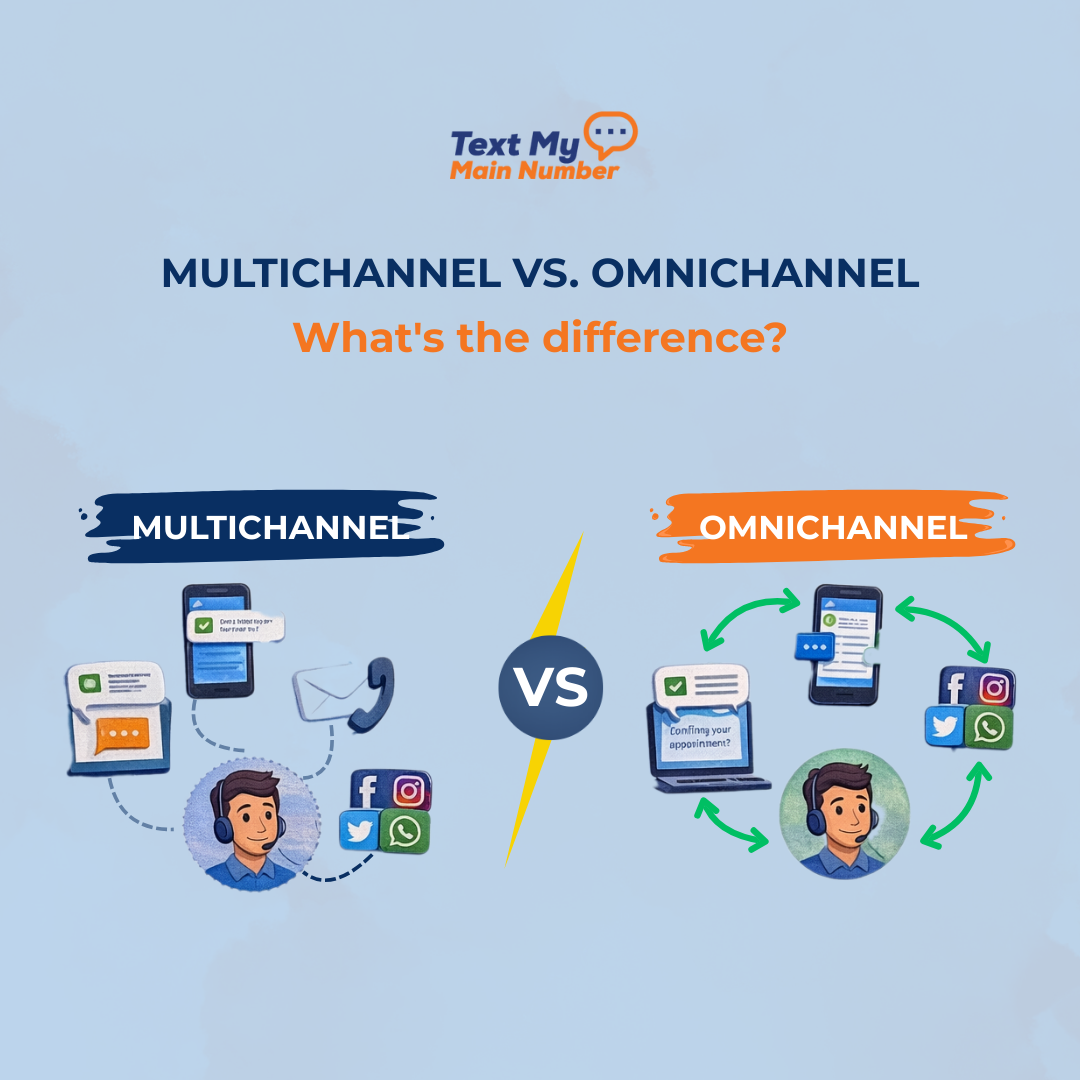
While the terms are often used interchangeably in 2026, multichannel and omnichannel represent two distinct levels of customer communication strategy. This distinction becomes even clearer when comparing how customers respond to different communication methods, especially in Business Texting vs Phone Calls: How to Use Both Effectively.
Multichannel
A multichannel approach means your business offers several separate ways for customers to get in touch—text messaging, phone calls, email, live chat, and possibly social messaging. Each channel exists independently. Customers can reach out on any of them, but their experience is siloed. A conversation started via email doesn’t carry over to SMS or chat unless manually transferred, often resulting in repetition and lost context.
Omnichannel
An omnichannel approach connects those channels into a unified experience. It allows the conversation to move fluidly across platforms without losing history or continuity. A customer can start with a chat, follow up via text, and finish with a call—and your team sees the entire thread as one conversation. Context is preserved, response times improve, and customers feel known.
In today’s landscape, multichannel is the starting point—an essential baseline for meeting modern customer expectations. But omnichannel is the standard customers increasingly recognize and trust, especially in industries where speed, personalization, and clarity matter.
For most small businesses, it’s not necessary to invest in full omnichannel integration from day one. What’s critical is building a multichannel foundation aligned with how your customers already communicate. Even starting with SMS and one or two complementary channels—like email or VoIP - can resolve friction, close communication gaps, and dramatically improve the customer experience.
The Channels Customers Actually Use (and Expect)
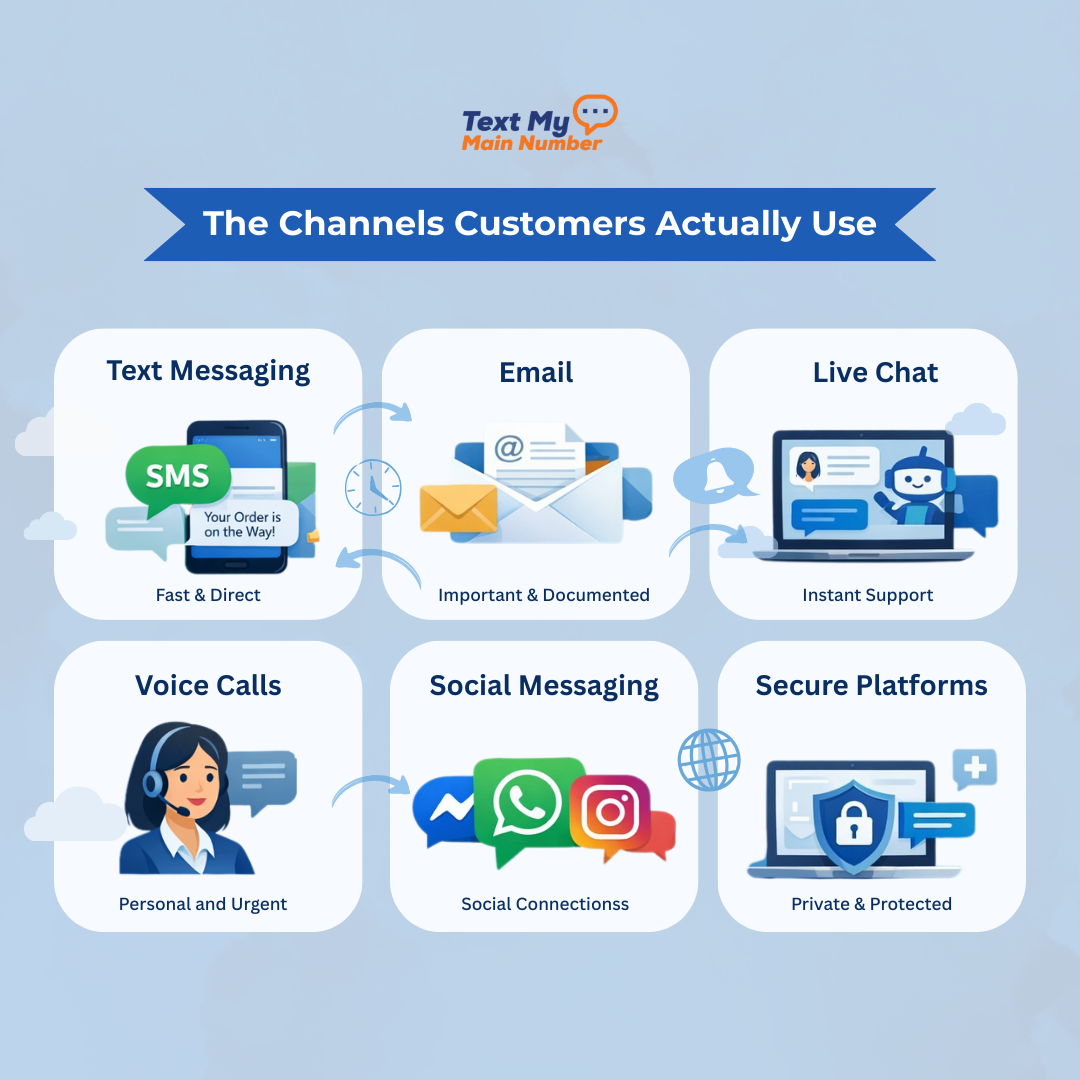
In 2026, customers expect businesses to communicate on their terms—not the business’s. That means there’s no longer a single preferred channel. Instead, customers move fluidly between multiple platforms depending on the situation, urgency, and complexity of their needs. The expectation is clear: meet them where they are, respond quickly, and maintain context across touchpoints.
Here’s a breakdown of the core channels today’s customers actively use and expect your business to support—driven by behavior, not assumption:
- Text Messaging (SMS)
SMS continues to be one of the most powerful and trusted channels. Its effectiveness isn’t accidental — businesses that apply proven engagement patterns consistently see better results, as shown in 10 Proven Ways to Boost SMS Customer Engagement for Your Business. It’s fast, direct, and widely accessible—even without internet. Customers expect to receive appointment confirmations, delivery alerts, service updates, and simple follow-ups via text. With open rates often cited as significantly higher than email or other digital channels, SMS has become the go-to option for time-sensitive communication. It’s also often the first channel customers engage with because of its convenience and familiarity.
Despite predictions of its decline, email remains a cornerstone of business communication. Customers rely on it for receipts, service documentation, onboarding materials, terms and conditions, and anything that may need to be archived or referenced later. It's the preferred channel when clarity, structure, and a digital paper trail are essential. While it's slower than SMS or chat, it still plays a critical role in formal and transactional communication.
- Live Chat
Live chat has become the default choice for customers who want real-time interaction without picking up the phone. It’s commonly used on websites for pre-purchase questions, booking assistance, technical support, and fast resolutions. Unlike SMS, which may involve delays, or phone calls, which require full attention, live chat offers a balance—immediate yet non-intrusive. Customers expect it to be available during business hours, and increasingly, after-hours support is supplemented with AI or chatbot triage.
- Voice Calls
While usage has declined for casual inquiries, phone calls still matter—especially for complex, emotional, or sensitive situations. When there's a billing dispute, a high-value purchase, a medical issue, or an urgent service problem, customers often want to hear a human voice. They expect prompt responses, informed staff, and continuity with previous interactions. Voice isn’t dead—it’s just more specialized now.
- Social Messaging Platforms (Facebook Messenger, WhatsApp, Instagram DMs)
More customers are reaching out on the same platforms they use with friends and family. These channels are especially popular among younger demographics and mobile-first users. If your business maintains an active presence on social media, customers assume they can message you there—and expect a timely response. Ignoring these channels or treating them like secondary inboxes creates unnecessary friction.
- Industry-Specific Platforms or Secure Portals
In highly regulated industries—such as healthcare, legal, financial services, or government—customers expect to interact via secure, compliant platforms. These might include HIPAA-compliant patient portals, secure document upload tools, or encrypted messaging apps. While they may not be used for day-to-day communication, these platforms are non-negotiable for handling sensitive data and maintaining compliance.
How to Build a Multi-Channel Strategy That Works
A successful multi-channel strategy starts with one fundamental principle: listen to your customers before you build for them. Too many businesses choose channels based on internal convenience or legacy tools. But the most effective communication strategies are shaped around real customer behavior—how they already reach out, what they respond to, and where friction exists today.
Begin by auditing your current communication touchpoints. Where do most inquiries come from? What are your response times like across each channel? Where are customers getting stuck or dropping off? These answers should guide—not follow—your channel selection.
Once you have that clarity, assign each channel a clear purpose based on its strengths:
- Use SMS for time-sensitive communication like appointment reminders, confirmations, short updates, and missed call follow-ups. It's fast, immediate, and widely read within minutes.
- Use email for structured communication: invoices, onboarding documents, order summaries, contracts, or anything requiring a record. It's ideal when formality, detail, or documentation matters.
- Use live chat during business hours to address questions in real time—especially for sales inquiries, basic support, and service booking. It reduces phone volume and prevents delays from back-and-forth emails.
- Use phone calls for high-touch situations like onboarding, escalations, consultations, or any emotionally sensitive topic. When tone, nuance, or urgency matters, a voice conversation goes further.
The goal isn’t to flood your business with channels you can’t manage. It’s to be strategic and responsive—present where your customers naturally engage, and consistent in how you respond. Choose the right mix of channels for your business model, assign clear roles for each, and ensure your team is equipped to manage them without fragmentation.
Ultimately, a multi-channel strategy isn’t about doing more. It’s about doing the right things in the right places, with the flexibility to grow as your customers—and their expectations—evolve.
Why Consistency Matters More Than Channels
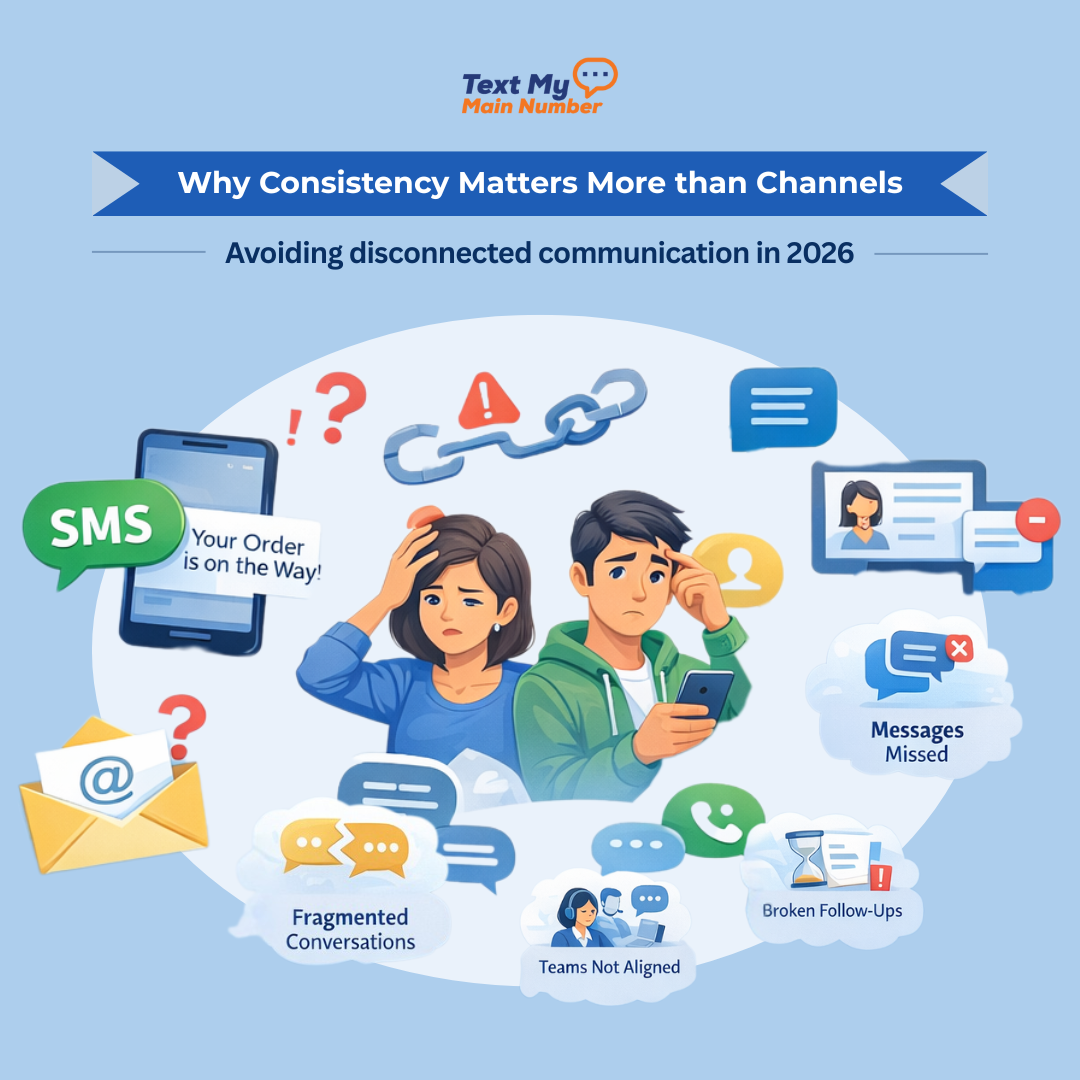
Avoiding Disconnected Communication in 2026
For many small businesses, the first step toward modern communication is adding more channels—text, email, chat, maybe even social messaging. But without a clear strategy and the right systems in place, more channels can quickly become more confusing.
Disconnected communication doesn’t just frustrate your team—it erodes customer trust. When different channels are managed separately, messages get lost. Conversations become fragmented. One team member replies to an email while another responds to a text, unaware it’s the same customer. Follow-ups fall through the cracks. Responses become inconsistent. And the customer? They notice.
The Pitfalls of Disconnected Communication
Without centralized management, multichannel messaging becomes fragmented. Here's what that looks like in real terms:
- Separate inboxes for each channel, making it hard to track the full conversation
- Missed messages or delays when no one notices a customer’s follow-up
- Duplicate replies from different team members, unaware of each other’s responses
- Inconsistent tone and timing, which confuses customers and reduces confidence
- Loss of context, forcing customers to repeat themselves with every touchpoint
This kind of disjointed experience doesn’t just slow things down—it damages trust. Customers don’t care which platform they use; they just want to feel heard. This expectation reflects broader research on modern customer behavior, including studies on customer expectations for response time across digital communication channels. If your business can’t follow the thread, they’ll find one that can.
What Customers Expect in 2026
Customer behavior has evolved. They don’t see communication as a series of isolated events—they see one continuous conversation. Whether they start on SMS, follow up by email, or escalate via phone, they expect your business to:
- Recognize who they are
- Understand their history
- Respond in a timely and informed way
When you can’t deliver that continuity, it feels like you’re not paying attention—even if you are. And that perception is what drives churn, missed revenue, and poor reviews.
How Small Businesses Can Still Win—With the Right Tools
Here’s the reality: you don’t need an enterprise tech stack to deliver a connected experience. What you do need is a smarter system—one that keeps everything in sync.
Platforms that succeed here typically align with the customer service channel frameworks outlined in Top Customer Service Channels for 2025: How to Choose the Best One for Your Business. A modern communication platform should help you:
- Centralize conversations across SMS, email, chat, calls, and more
- Preserve message history so anyone on your team can pick up where the last person left off
- Assign and track replies to avoid dropped threads or conflicting messages
- Deliver a consistent tone and brand voice across every channel
These aren’t “nice to haves”—they’re the foundation of customer trust in 2026.
It’s Not About Being Everywhere—It’s About Being Aligned
You don’t need to be active on every channel. But on the channels you do use, you need to be clear, consistent, and coordinated.
The businesses that thrive this year are those that communicate like real people:
- They respond quickly
- They remember the conversation
- They stay relevant no matter the channel
Disconnected tools and patchwork processes won’t cut it anymore. Customers expect better—and with the right system, even the smallest team can deliver it.
Start Simple. Start Smart. Start Now.
You don’t have to activate every channel today. Start with SMS and one or two channels your customers already use. See what works, where engagement grows, and where friction still exists.
The goal is evolution, not perfection.
With the right platform, you can adapt your communication strategy over time—adding new channels, automating smart replies, and giving your team the ability to respond with context, not chaos.
Start your 14-day free trial of Text My Main Number and see how easy it is to meet your customers where they are—on their terms, across the channels they already use.

.svg)