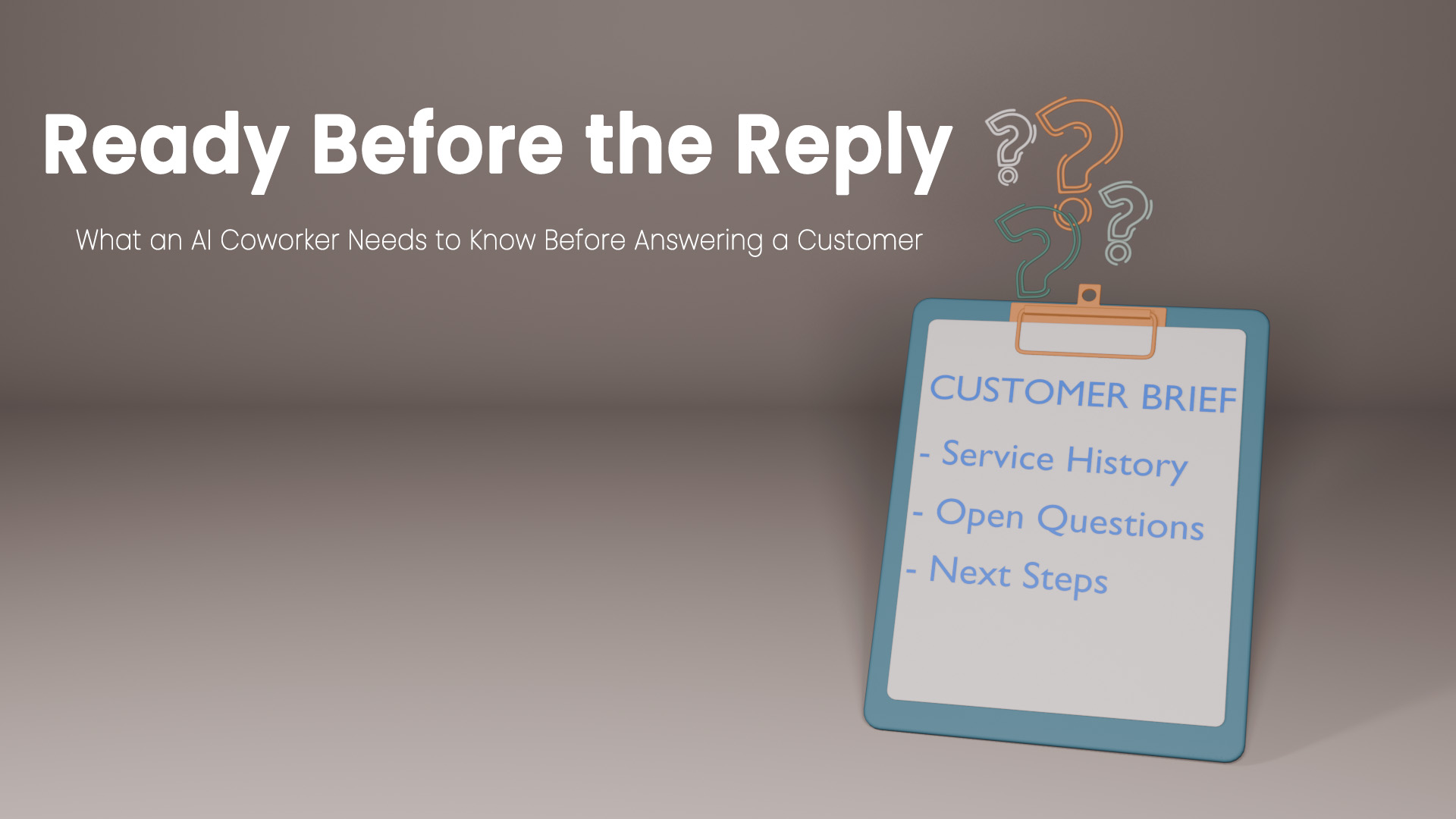

Picture a family-run pest control company in Raleigh, North Carolina. A returning customer, Maria, texts that ants are back in her kitchen three weeks after treatment. Before the office offers another visit, there is an older question to find: last time, she asked whether the treatment was safe around her dog. Nobody got back to her.
AI customer conversation preparation should bring that unfinished business into view alongside the service history, current re-service policy and this week’s schedule. Knowing what happened last visit is only part of being ready to answer today.
A conversation summary describes what happened in an exchange. A preparation brief is built before the next reply, combining relevant history with current policy, today’s conditions and what the business still owes.
A colleague can assemble this brief manually, or an approved AI tool can draft it from selected records. Either way, the person answering needs a short, checkable account of where things stand.
What AI Customer Conversation Preparation Should Include
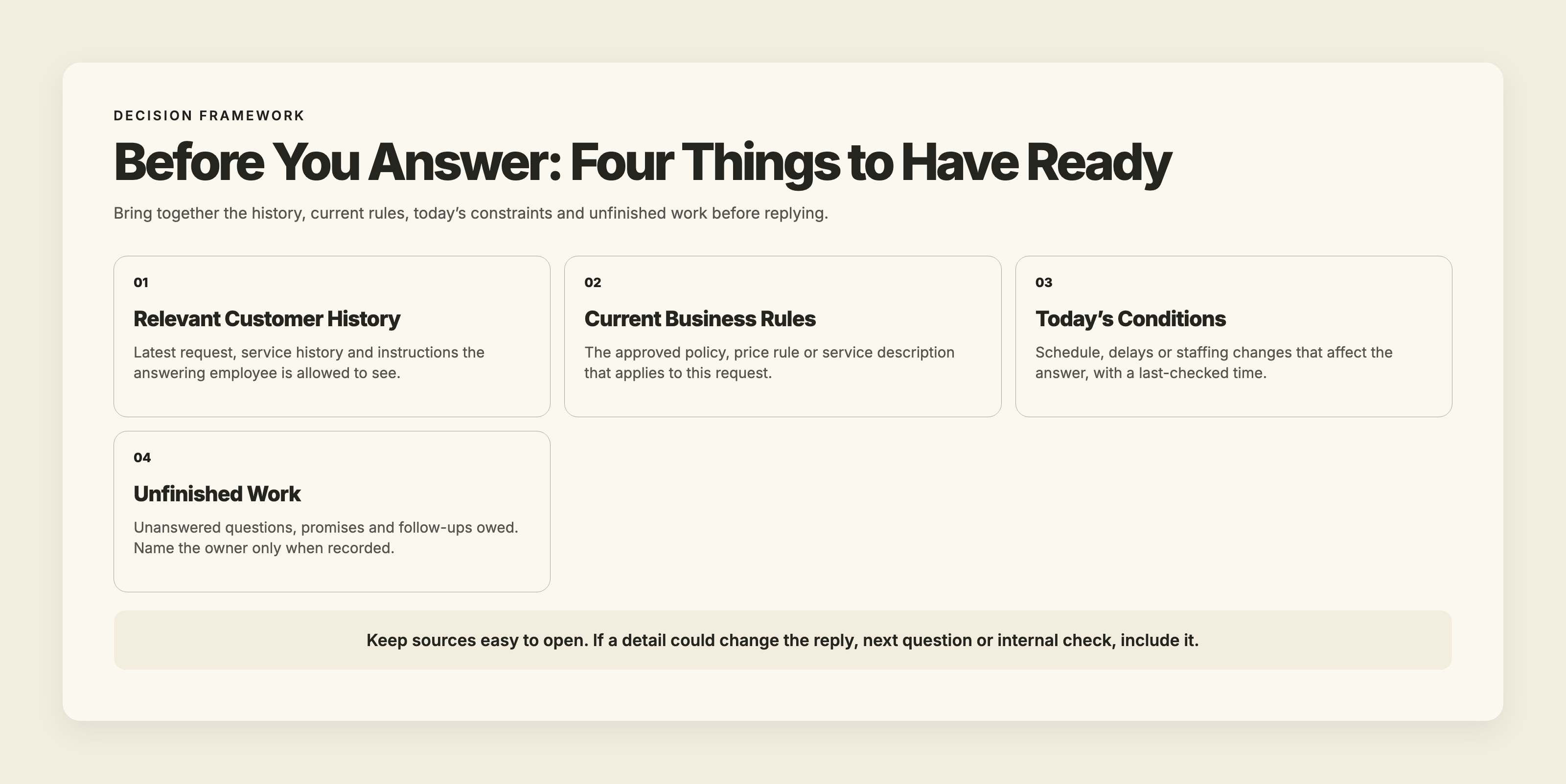
We would build the brief around the answer the customer needs now. Include a detail when it could change the reply, the next question or an internal check.
-
Customer history the employee is allowed to see. Include the latest request, relevant service history and instructions that affect this exchange. For the pest control company, that means the recorded service date, what was treated and the customer’s report that ants have returned.
-
Current, approved business information. Bring in the applicable policy, price rule or service description. Use the current written re-service terms rather than an employee’s recollection of what the company usually offers.
-
What is true today. Include schedule availability, delays, staffing changes or other conditions that could change the answer. Give changing information a last-checked time.
-
Questions and promises still open. Preserve unanswered questions, follow-ups owed and recorded commitments. Include the responsible person when the record names one; leave ownership unresolved when it doesn’t.
Aim for something the employee can read in under a minute, while keeping any condition that changes the answer. Keep supporting records accessible instead of copying them all into the brief.
This is a useful application of what an intelligent coworker is: software assigned a specific preparation job, with clear information sources and a clear stopping point.
Put the Pest-Control Brief to Work
Maria’s brief could start like this, with unverified details kept under gaps to check.
- Current request: Maria reports ants are back in her kitchen three weeks after treatment.
- Last service: Maria’s text gives the interval since treatment; the service record still needs checking.
- Re-service policy: Eligibility has not been checked against the current written terms.
- This week's route: Reported full until Thursday; last-checked time not recorded; no appointment offered or booked.
- Open question: Maria asked whether the treatment was safe around her dog. Nobody got back to her.
- Gaps to check: Exact service date, what was treated, product used, applicable re-service terms and when the route schedule was last checked.
- Next step: Check the service record, current policy, schedule and treatment-specific instructions before offering a visit or answering the dog question.
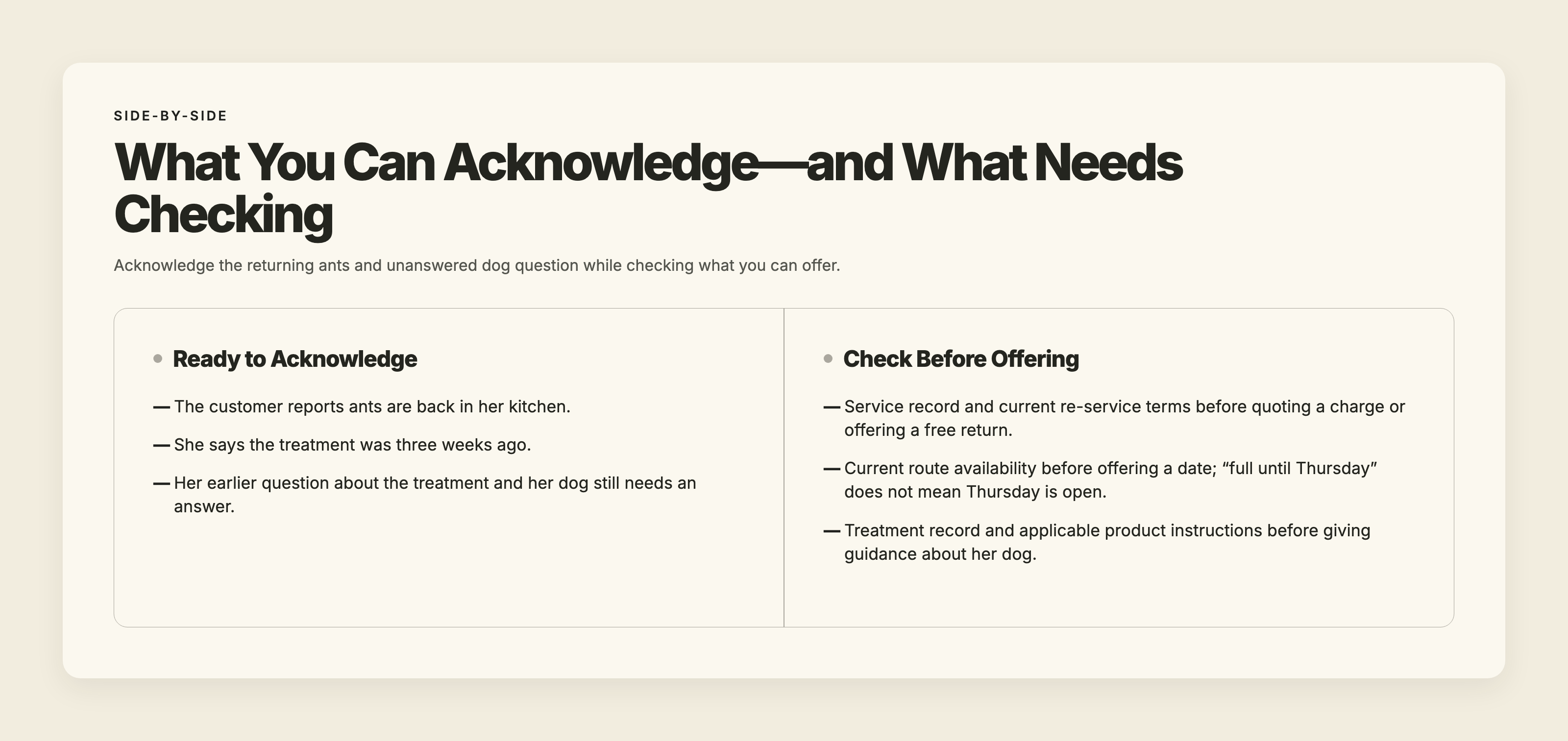
That draft makes the gaps visible instead of pretending the preparation is finished. Once the employee checks the service record and policy, replace those gaps with the actual date, documented treatment and applicable terms, keeping references the next person can open.
The same goes for the schedule: record when someone checked it.
Check Re-Service Terms Before Offering a Return Visit
Three weeks since treatment does not, by itself, mean the customer gets a free return visit.
Compare the documented service with the current policy conditions. If a detail needed for that decision is missing, keep it under the gaps to check rather than telling her she qualifies.
“Full until Thursday” means don’t promise an earlier visit. It doesn’t mean Thursday is open either.
We would want the preparation to make those checks obvious before anyone quotes a charge or offers a date. Otherwise, the customer may hear a commitment the office then has to withdraw.
Bring the Dog Question Forward
The earlier question concerns the treatment actually used. A general “pet-safe” answer cannot replace guidance for that treatment.
The employee needs the treatment record and applicable product instructions. EPA’s pest-control guidance advises following pesticide-label instructions and safety warnings. That is a sound reason to avoid broad “pet-safe” wording or a guessed waiting period.
If the treatment details are missing, say so plainly in the internal brief. Someone needs to locate them before giving treatment-specific guidance.
The employee can acknowledge both the returning ants and the earlier unanswered question without claiming that a check is already underway. An old unanswered question is still unanswered.
Select the Records Before Asking AI to Write
Use a short setup process:
-
Identify the customer and active service matter. Keep Maria’s kitchen-ant request separate from any unrelated visits or properties.
-
Select the relevant history from her new text, the earlier dog question and the service record. Keep the original references so the employee can check them.
-
Add the current business sources. Supply the applicable re-service policy and current schedule separately from the conversation history. The customer’s old appointment discussion cannot tell you today’s availability.
-
Use an AI tool approved for the customer information involved. Only give it records the person answering is allowed to see; keep restricted information out from the start rather than hiding it afterward.
Give the tool a short preparation instruction:
- Task: Prepare a short internal brief for the employee answering Maria, using only the approved records provided.
- Include: Relevant history, current policy, today’s schedule constraints and unanswered questions or promises.
- Accuracy: Keep customer statements separate from business commitments, retain the supplied source references and flag missing or conflicting information without guessing.
The tool must not contact the customer or change any records.
Leave out unconfirmed old notes, guesses about the customer’s motives and personal details unrelated to the service request.
This is the difference between working context and long-term AI memory in practical terms: assemble what this reply needs without retaining everything Maria has ever said.
Refresh the Information Before You Answer
A brief can become stale even when the customer’s conversation history stays exactly the same.
The route may fill up. The policy may change. Another employee may answer the dog question while the draft is waiting to be read.
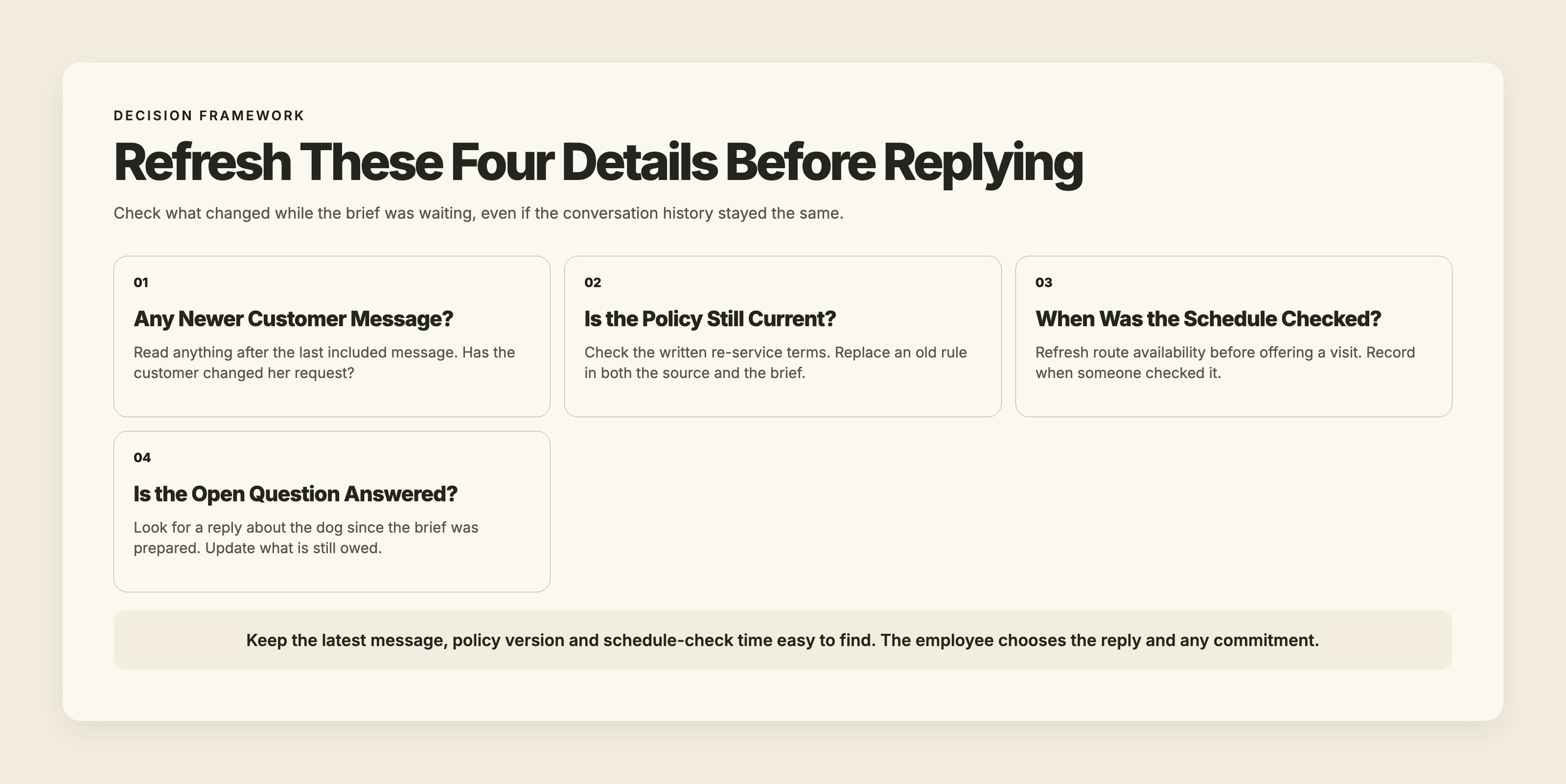
Before replying, check whether a newer customer message changes the request, whether the policy is current and whether the schedule information is recent enough to use. Also check whether any open question has since been answered.
Keep the service record, policy version, schedule-check time and latest included customer message easy to find.
If the brief pulls an old policy, correct the source used for preparation as well as the draft. For that larger maintenance job, read how to correct outdated AI business knowledge. Fixing only the current wording leaves the old rule ready to appear again.
If the service record and an employee’s note disagree, name the disagreement and who needs to check it. A brief is only as useful as the records behind it.
The brief helps the employee prepare; the employee chooses the reply and any commitment.
Start With a Shared Text Record
Someone preparing the brief needs access to what the customer and team actually said.
With TMMN, everyone assigned to a number can see its conversation history. The message log identifies the team member behind each outgoing text. That shared text history gives the person preparing the brief a record to consult.
For the setup details, read about team texting from one business number. TMMN doesn’t write the brief for you; it gives everyone assigned to the number the same text record to write it from.
To try shared business texting with your team, start a 14-day free trial.
Find the Question You Still Owe an Answer To
Before the employee replies, ask: What question do we still owe this customer an answer to, and what needs checking before we offer anything?
For the pest control company, Maria’s new ant report needs attention. Her earlier dog question needs to travel with it.
We would judge the brief by whether the employee spots those obligations before typing a reply. A useful preparation brief gives them a clear starting point—including the unfinished business the customer should never have to remind the team about.