

Monday morning, the phone rings at a boutique gym. Sarah wants to know about trial memberships and pricing. The receptionist jots down her name and number, then types a quick note into the spreadsheet: “Called about trial; interested in classes.” Tuesday, a sales rep sends Sarah an email listing class schedules. Wednesday she stops by for a trial session, mentioning she worries about being locked into long contracts. By Friday, another team member calls her to close the deal but ends up repeating questions Sarah answered three days earlier. No one suspected a glitch; the information was in the spreadsheet. But the story—the pulse—of Sarah’s experience never traveled beyond isolated cells. This pattern is what happens inside many small businesses relying on spreadsheets to track customer interactions.
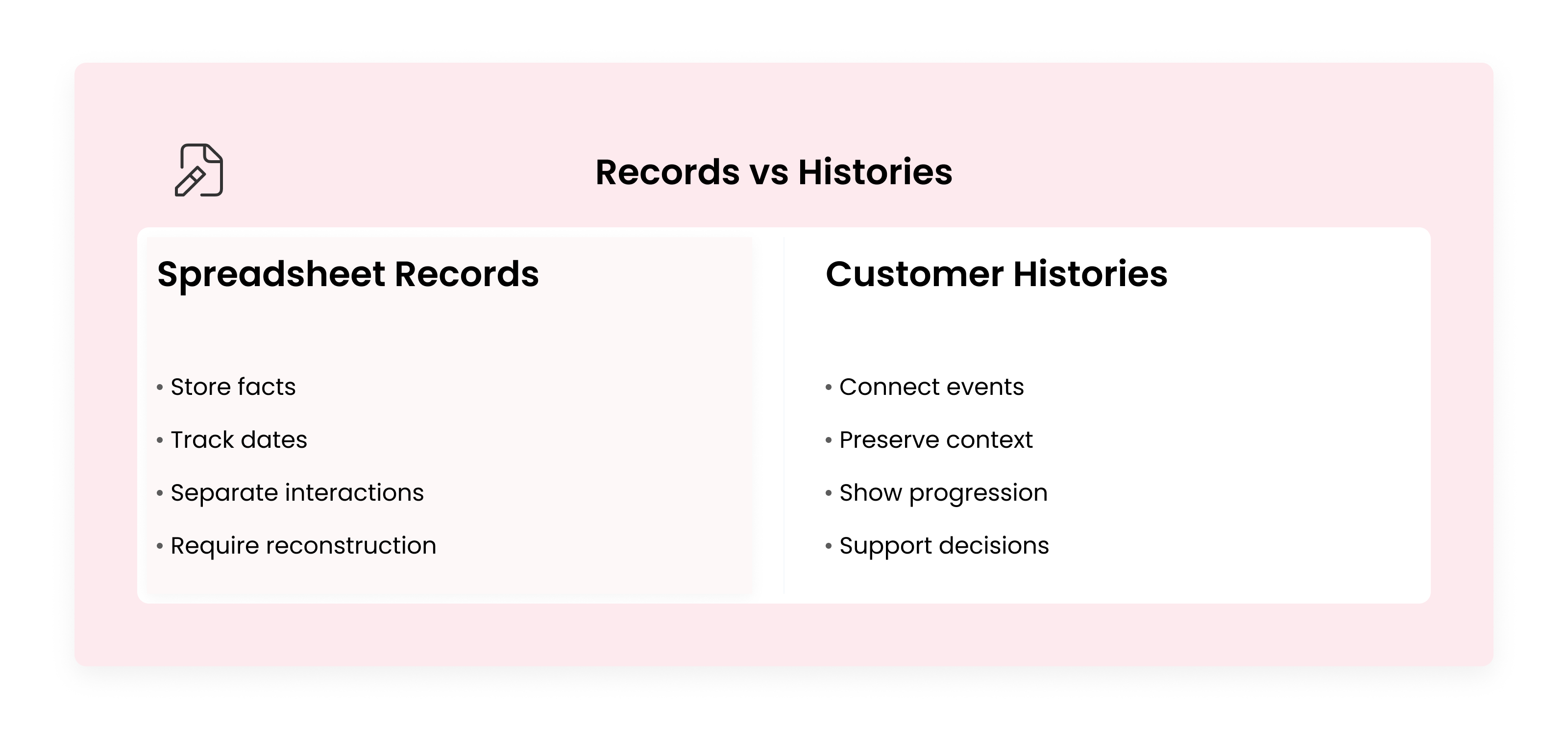
Customer relationships build histories, not just records. Each call, email, or visit adds texture that matters for what comes next. The challenge becomes even more noticeable when interactions move across channels, since every conversation carries different strengths and expectations, a theme examined in SMS vs Phone vs Email. Yet spreadsheets slice these moments into standalone entries, burying context and forcing employees to piece together stories—sometimes making assumptions, sometimes asking repeated questions, sometimes sending mixed messages. It’s an operational reality observed repeatedly: data exists, yet the relationship feels like it’s slipping through the cracks.
At first, it doesn’t seem important to separate records from histories. But that’s usually where things begin to unravel.
Every interaction matters beyond its face value. The gym’s receptionist logging Sarah’s call isn’t just ticking a box; it’s the foundation for follow-up moves that depend on nuance. When that foundation flattens into disconnected rows, employees fill gaps with guesswork or duplicate effort. At what appears as simple tracking, you’re actually managing memory—living memory—that guides action. When memory breaks, costs creep in quietly.
Why Spreadsheets Feel Useful for Customer Tracking
In many small businesses, a spreadsheet feels like a lifeline. It corrals chaos, lets managers monitor leads, and hands staff a shared reference point. A retail showroom facing multiple inquiries might add columns for product interest, customer type, or follow-up date. Adding tabs for different product lines or stages feels like progress.
But as interactions grow, these patches become a thicket. Recently, I watched a showroom staffer juggling three tabs: one for availability questions, one for pricing requests, and a third for order status. Without clear links among these, the same customer appeared multiple times under slightly different names. One employee noted an inquiry in the pricing tab; another answered a follow-up without realizing it was the same person. Day after day, the staff reconstructed stories from fragmented sheets, sometimes calling customers twice with conflicting information or missing a moment to close.
That’s the trap: spreadsheets impose order by isolating data points, but they unintentionally fracture flow. More columns or sheets don’t solve the problem; they deepen the puzzle. What seems like control turns into fragmented memory hunting.
How Modern Customer Expectations Changed the Tracking Problem
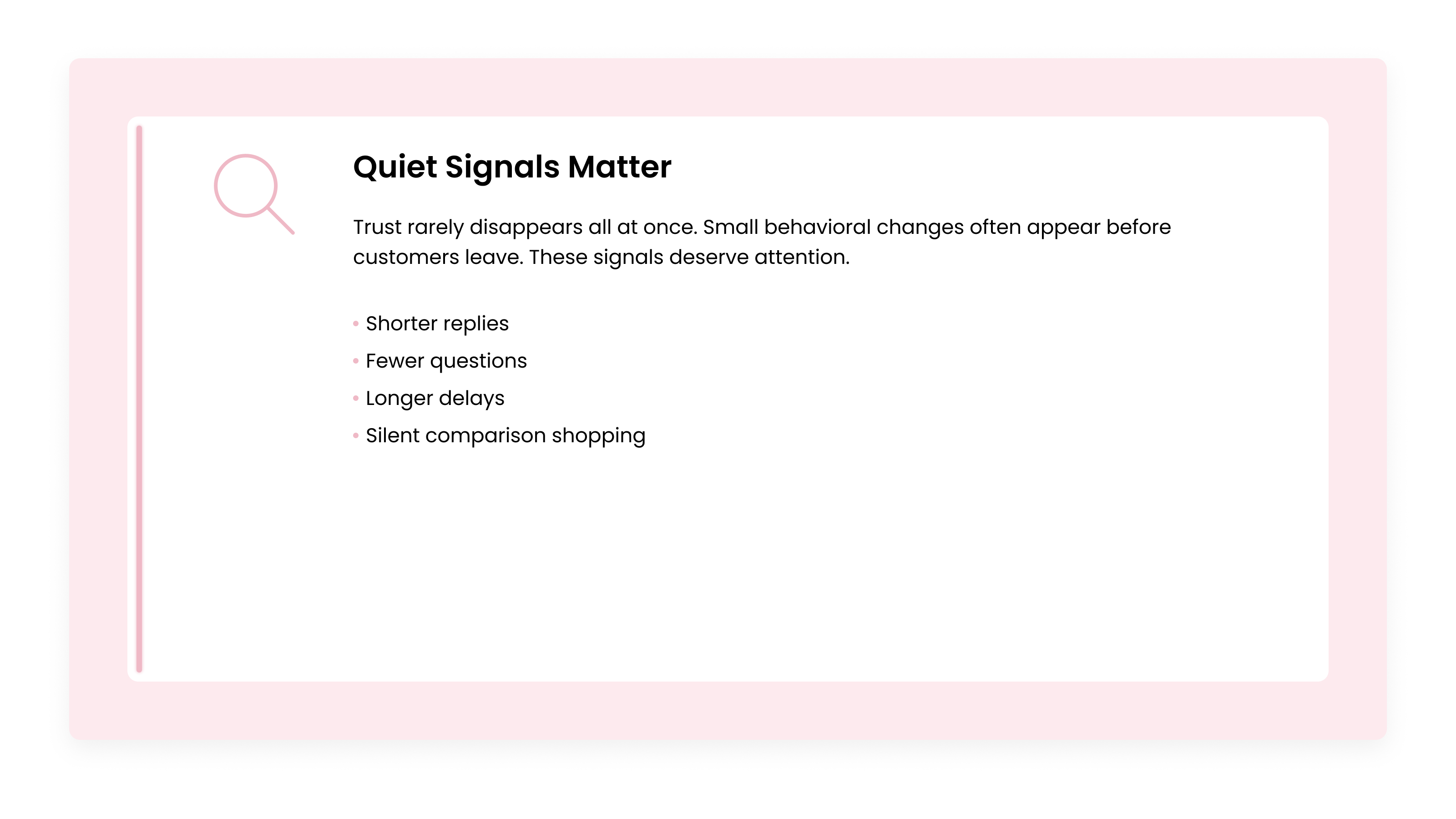
Customers have learned to expect more. They don’t want to repeat themselves. I’ve heard it from a support agent who said, “I can tell when a customer’s patience is running thin — their replies get shorter, their questions drop. They’re thinking about stopping the conversation because they know it’s going to be a hassle.”
This subtle shift in their behavior signals a loss of trust well before any direct complaint. Customers start scanning competitors silently, guessing whether another company will just ‘get it’ faster. The moment a customer feels they’re a ‘reset’ each time they call, their engagement clicks into caution mode.
A SaaS onboarding team I worked with used to lose several leads because the new user had to explain context repeatedly. No one ever said the process was “bad”; users just replied less often, eventually going quiet and vanishing without a trace. That silence was louder than any complaint.
Most teams only realize something slipped behind the scenes when it’s too late. The customer’s quiet withdrawal is the last signal — one no spreadsheet cell can capture.
The Difference Between Recording Activity and Understanding Progress
Operationally, recording an activity and understanding progress aren’t the same. Logging that a call happened is simple. Knowing what changed in the customer's status or mindset because of that call requires connecting dots.
In a wedding venue office, I once overheard this scene:
Office manager: “Did we confirm the date with the client?”
Sales rep Jason: “I thought the coordinator did that last week.”
Coordinator: “No, I was waiting for client approval.”
Meanwhile, the client called again, frustrated to explain details anew. No one had placed the pieces together to know who was truly responsible.
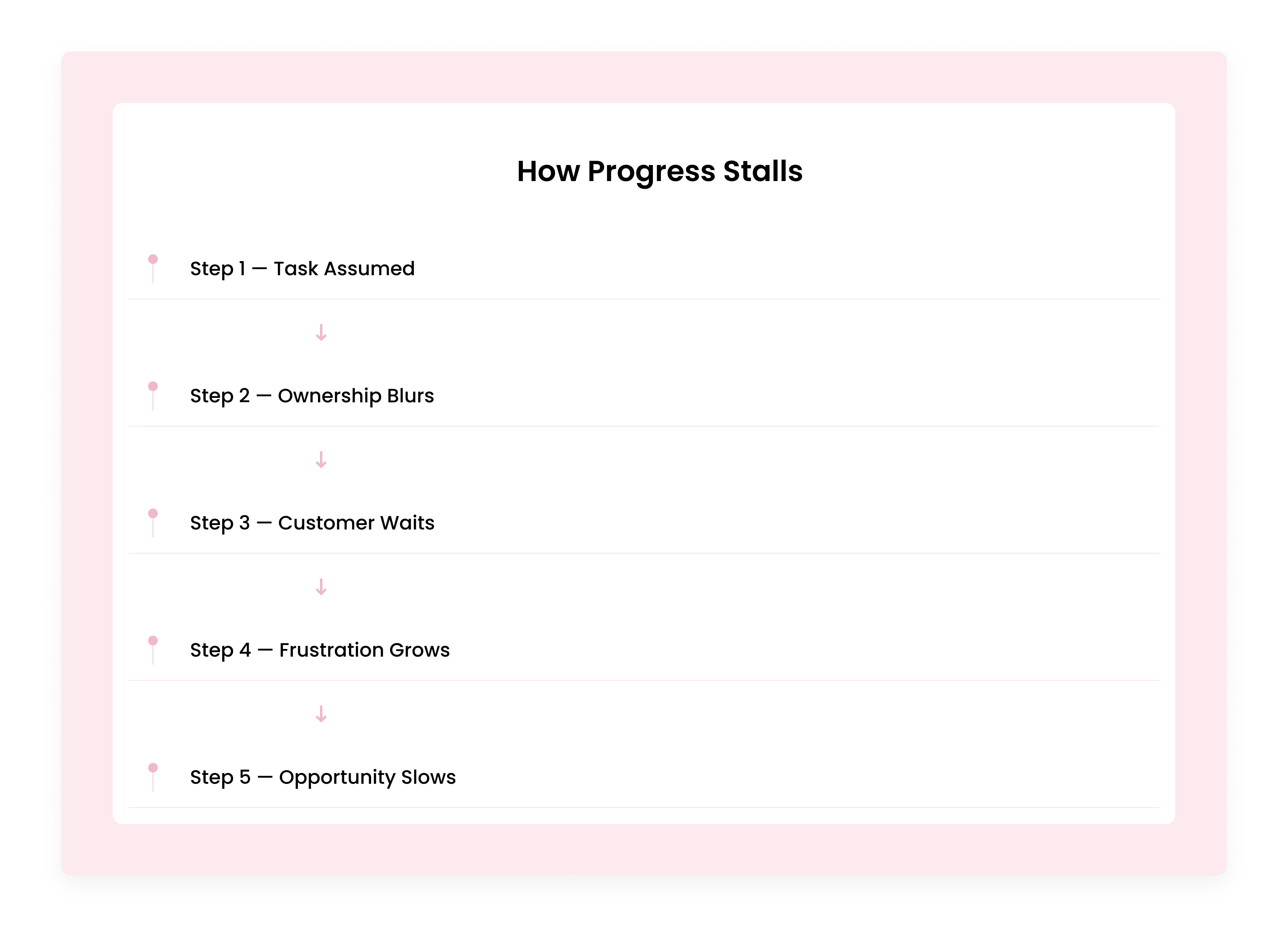
These duplicated assumptions and broken handoffs aren’t shiny mistakes. They’re routine operational friction when the timeline of progress isn’t tracked—only the fact of activity.
When each interaction feels like a restart, time slips away chasing clarity instead of moving deals forward. I’ve seen teams lose hours every week just untangling who owns what, all because records lack relational flow.
H2 The Hidden Operational Cost of Rebuilding Customer Context
Calculations that focus solely on payroll often understate the real cost of fragmented customer histories. Take a 100-inquiries-per-month SaaS team. Thirty require multi-touch follow-ups. Each follow-up costs 3 minutes extra just to rebuild context. That’s 90 minutes monthly — seemingly small.
But every context rebuild breaks a rhythm. The staff member interrupts what they were doing, flips between tools, rereads email threads, and sometimes pings colleagues for updates. These interruptions cascade.
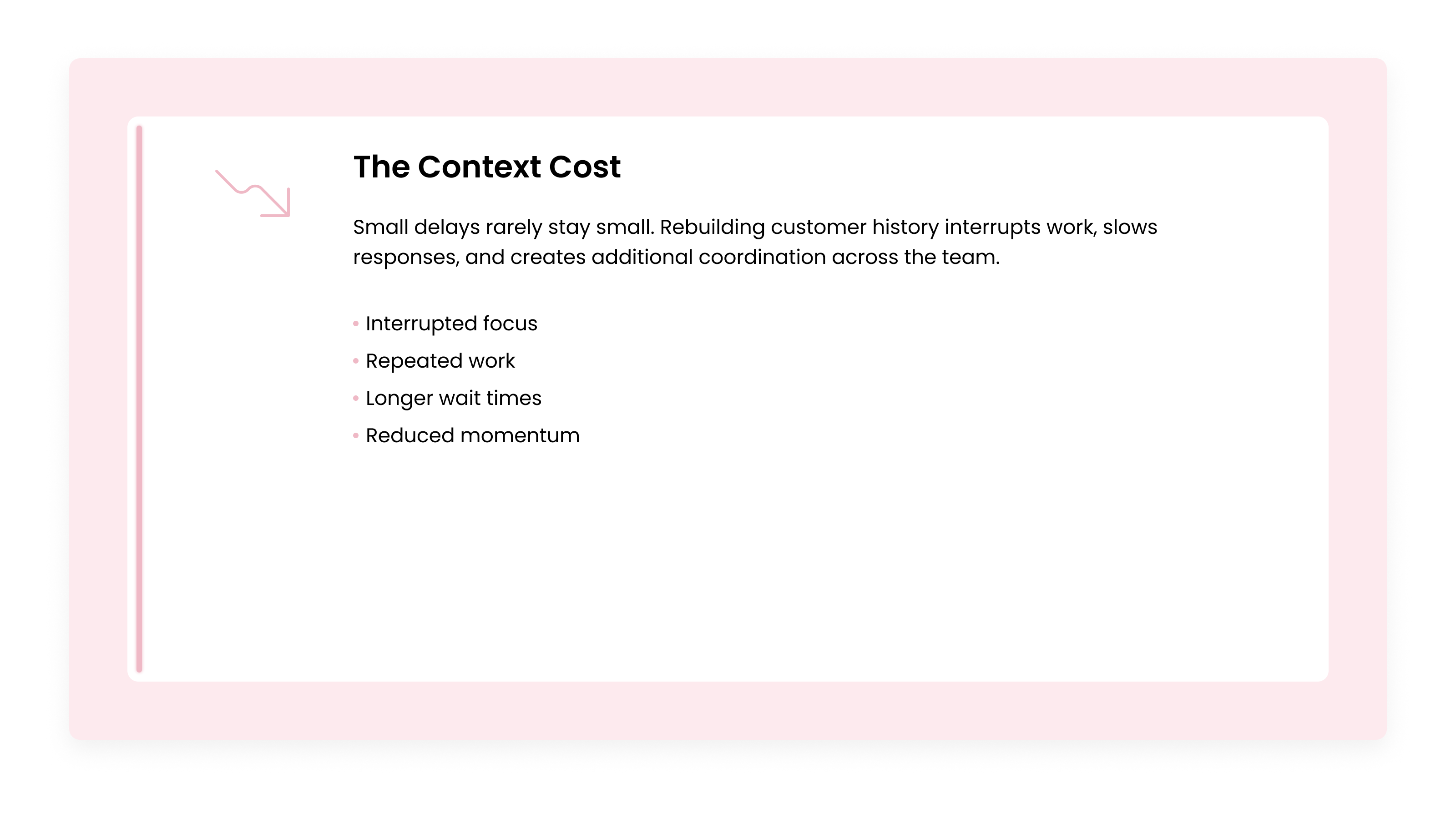
Add in lost momentum—the customer waits longer, so the sales window narrows. Managers pitch in to sort confusion. Interaction progress slows. Trust, already delicate, becomes strained.
Multiply the hidden cost of these pauses: delays in closing deals, increasing follow-up cycles, and subtle churn.
When these factors stack, the cost goes beyond labor dollars, turning into lost revenue and strained team morale. It’s a slow leak spreadsheets never highlight but every frontline operator feels.
A Practical Way to Think About Customer Interaction History
Consider this framework experienced teams live by: Record → Timeline → Signal → Decision.
Record means capturing facts. But that’s just the start. Failure here looks like missed emails or incomplete notes—team members find gaps in basic info.
Timeline means linking those facts in order. Failure shows up as employees scrambling to piece together a customer’s journey, asking repeated questions, or responding to outdated info.
Signal is noticing what the timeline says. Has the customer’s interest plateaued? Are objections rising? Ignoring these cues looks like missed upsell chances or unflagged risks.
Decision means acting on signals promptly. Failure here? Delayed follow-ups, redundant outreach, or lost renewal opportunities.
Each stage is a turning point in the customer story. I’ve watched a sales agent pause mid-call because the prior conversation wasn’t logged where they could find it fast. Weeks later, a deal sank quietly because a timely decision never happened.
This framework moves tracking from admin work to a muscle of operational intelligence.
Operational observation: The Timeline stage holds the key—progress rarely stalls from missing facts but often from failing to order them into a clear sequence.
How Connected Customer Histories Support Better Business Decisions
An insurance broker I know manages dozens of clients with annual renewal cycles. One client had expressed hesitations about coverage earlier in the year during a lengthy email chain. When renewal time came, the broker reviewed that thread and adjusted the pitch—addressing those specific concerns.
The client responded warmly, feeling heard and understood. No cold calls. No repeated questioning.
Behind the scenes, connected histories let the team make that call with confidence. Everyone involved—from the sales rep to the support agent—had access to the same evolving narrative.
Without that history, the broker might have made a generic appeal, missing subtle cues that signaled hesitation. That misstep would often mean renewed skepticism or a lost customer.
When customer stories connect seamlessly, business decisions sharpen. Conversations become continuations rather than restarts. Teams avoid duplicated effort. Customers feel remembered, not recorded. As interaction volume increases, preserving history becomes inseparable from managing capacity, a challenge explored in How Businesses Handle 50+ Customer Conversations Without Chaos.
Where Communication Systems Naturally Evolve
In smaller setups, spreadsheets work to a point. Then the friction starts—notes scattered, tabs multiplying, histories fragmented. Teams shift toward shared inboxes, then to CRM systems designed to link exchanges.
It doesn’t happen because of some grand strategy. It happens when someone on the team gets tired of asking the same question twice or losing deals to silence.
It starts with informal practices: tagging emails, forwarding conversations, leaving verbal notes. As those habits evolve, deciding where conversations should flow becomes part of preserving their history, a challenge explored in How to Route Customer Messages. Gradually, tools that combine chat histories, assignment tracking, and timestamps gain traction.
The path moves from storing isolated touchpoints to building layered narratives. This maturity lets teams scale without losing the memory of who the customer is and where they stand.
Key Takeaways
- Spreadsheets create isolated snapshots of customer interactions, but real relationships require connected histories that preserve context.
- Customers’ shrinking patience signals lost trust long before overt complaints; unlinked data points fail to catch these subtle cues.
- The operational cost of rebuilding customer context multiplies beyond time spent—it disrupts momentum and strains trust.
- Tracking isn’t just recording activity; it’s following a timeline that reveals signals triggering informed decisions.
- Systems evolve naturally when teams grapple with repeated questions and deal losses, revealing needs for relational flow.
H2 Conclusion
It’s a common scene: a customer reaches out, several employees see bits of their story, but none can answer the simple question—where does this relationship stand? The answer hides in linked memories, not scattered records.
Tracking every customer interaction is about preserving usable memory. Not archives. Not data points. Memory that propels decisions, smooths handoffs, and respects customer time and attention. Seeing how connected communication histories work in practice often makes the difference, which is why many growing teams start with a 14-day free trial before changing established workflows.
I’ve watched businesses stumble trying to patch spreadsheets into narrative tools—and those who shift instead toward timelines and signals leave the trap behind. The difference isn’t just technology. It’s perspective.
Storing information is one job. Understanding relationships is another.
As organizations grow, this difference becomes a fulcrum for operational health, team sanity, and customer trust. Those who embrace it move from counting contacts to cultivating continuity—and that’s where lasting business happens.
.svg)